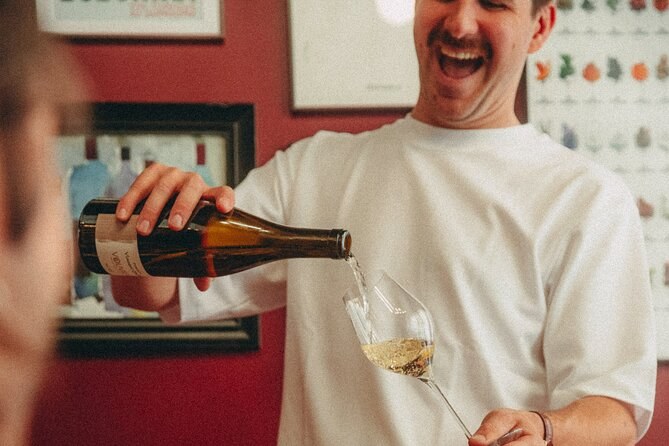
French Wine, Champagne And Cheese Tasting Paris SECRET WINE DOOR
Two hours seated in one room in the 15th. Six glasses, six cheeses, and not a step outside.
From $96 per person
Check Availability
September is the best month: warm at 21.5 °C, the second-driest of the year, and everything is open after the holidays. May is the wettest on the official normals. August is less of a problem than its reputation but does close some shops. Monday closes the markets all year round. Everything else is detail.
Not whether your walk runs. You are indoors at every stop and out only between them, and several of these listings say outright that they operate in all weather conditions.
What it changes is which walk you should book. A hill in July, a standing tasting round in February and a seated wine room in November are three quite different afternoons, and the month should pick between them.
What you see below are the official 1991–2020 normals for the Paris-Montsouris station, not a travel-blog average. The full month-by-month version, with what each one does to a walk, is on the weather page.
| Season | Avg high | Rain | What to book |
|---|---|---|---|
| Spring (Mar–May) | 12.8–20.2 °C | 45–69 mm a month | Anything. The best light of the year |
| Summer (Jun–Aug) | 23.4–25.7 °C | 51–59 mm | Morning departures, and the hill early |
| Autumn (Sep–Nov) | 11.1–21.5 °C | 44–55 mm | September for a walk, November for a tasting |
| Winter (Dec–Feb) | 7.6–8.8 °C | 42–62 mm | Seated tastings, and short walks |
September, and it is not close. You get 21.5 °C and only 44.7 mm of rain across 7.5 wet days — the second-driest month of the year — and the independent shops that took August off are back behind their counters.
May is the popular answer and it is wetter: 69.0 mm, the highest of any month on these normals. It is still a fine time to come; it just is not the driest, whatever you have read.
None outright, but August is the one you need to plan around. December gives you the most wet days at 11.4, which matters more on a walking tour than the total depth does.
If your trip is fixed and it lands in a wet month, book a seated tasting rather than a standing tasting round. That is the whole adjustment.
No, and the myth is worth dismantling because it is repeated everywhere. The compulsory bakery closure rota was abolished by the law of 20 December 2014, which removed the prefect's power to regulate it; the government has confirmed it will not restore it.
What happens now is voluntary. Independent bakeries and small shops still take one to several weeks off in July or August and neighbours still tend to stagger it so one stays open. Tourist-area cafés, bistros and every major monument stay open throughout.
The practical effect on a walk is one stop rather than an afternoon: a reviewer on the Devour route in late July found a shop shut and the guide swapped in a neighbour.
The markets are shut. Paris food markets close city-wide on Mondays, and on 1 January, 1 May and 25 December, so a Monday walk works bakeries, fromageries and bistros instead of a market hall.
That is a real change if the Marché des Enfants Rouges is what you came for, and no change at all otherwise. The markets and streets page has the hours the city publishes.
Less than in a Mediterranean city, because Paris eats from everywhere. The seasonal markers worth knowing are the third Thursday of November, when Beaujolais Nouveau is released and every bistro makes an evening of it; the autumn, when the chocolate fair fills a hall at Porte de Versailles; and late February, when the city judges its baguette competition and the winning bakery is news for a week.
The food calendar has the confirmed dates.
Not in any way you can rely on. These fares are set by the operators and move with demand rather than with a published season, and a couple of the listings captured for this site were running a dated promotion at the time.
What the season does change is availability. Between April and October, book three to five days ahead; in January and February you can often book the day before.
Less than you would think, because the Paris food walk you book is built on bakery and dairy rather than on produce. Bread, cheese, charcuterie, chocolate and pastry are the spine of every route here, and none of them has a season.
What does move: oysters are best in the colder months and appear on one Montmartre walk; the wine poured on the Champagne days changes with what the grower is showing; and the tarts and ice creams on a couple of listings are described as seasonal by the operators themselves.
So do not choose your month for the food. Choose it for the weather, the crowds and whether the shops are open, which is what everything above is about.
More than most people expect. In July and August the Montmartre climb at twenty-six degrees is a different afternoon from the same climb in April, and the morning departures fill first for exactly that reason.
In December and January the calculation inverts: the Marais is sheltered and short between stops, the Latin Quarter finishes indoors, and the seated tastings become the obvious booking rather than the fallback. The quarter guide sets out the ground each one covers.
Spring and autumn are the months where the quarter genuinely does not matter, which is a good part of why September is the answer to almost every question on this subject.
| Months | Book ahead | Why |
|---|---|---|
| April–June | Three to five days | The busiest stretch, and the best weather |
| July–August | Five days or more | Peak visitor numbers against fewer open shops |
| September–October | Three to five days | Everything reopens and demand stays high |
| November–March | A day or two | Quietest months; short-notice places are normal |
Yes, and it is the most useful weather decision you can make. The Marais is the most sheltered of the quarters: narrow streets, arcades along the Place des Vosges, and a covered market at the top of the Rue de Bretagne.
Montmartre is the least sheltered and the most slippery, because the climb is cobbled for much of its length. In persistent rain, move the hill to another day and take a flat quarter instead.
July and August by a distance, then May, June and September. What that changes for a food walk is availability rather than experience: these groups cap at nine to twelve whatever the month, so a busy August walk is the same size as a quiet February one — you just have to book it earlier.
Where the crowds do bite is Montmartre, because the Place du Tertre and the steps below the basilica are genuinely congested in high summer. A morning departure solves most of it, and the guides plan around the worst of it.
The Marais is less affected. Its streets are narrow enough that they never feel empty and its stops are indoors, which is another reason it is the default answer for a first trip in any month.
Independent bakeries and small food shops take one to several weeks off in July or August, voluntarily and staggered. Chocolate shops are the ones most likely to close on a Sunday, which one reviewer found on a Saint-Germain walk. The covered markets keep published hours and shut on Mondays.
None of that closes a walk. What it changes is the stop list on the day, and a guide who can swap in a neighbour is worth more in August than in October.
On a city walk, barely. The wine poured on these routes is chosen against the food rather than the calendar, and a fromagerie's board in February is as good as its board in June.
On a day out it does change. A grower shows what is in the cellar, and the Champagne houses rotate what they open; two operators say outright that the house you visit depends on availability rather than on a published schedule. And the third Thursday of November is the one date in the year when what is in the glass is fixed by law rather than by a sommelier.
Morning for the pastry walk, which is built for it, and for Montmartre in summer. Early afternoon for most Marais and Saint-Germain walks: the shops are open, the lunch rush has passed, and the evening is still yours. Late afternoon for the full-meal walks, which are meant to replace dinner rather than precede it.
Every walk here runs year-round, and the seated tastings run whatever the sky is doing.
Every paris walking food tour here runs year-round. The month-by-month detail is on the weather page, what is on when is on the food calendar, and the walks are on the Paris Food Tours grid.
Two hours seated in one room in the 15th. Six glasses, six cheeses, and not a step outside.
From $96 per person
Check Availability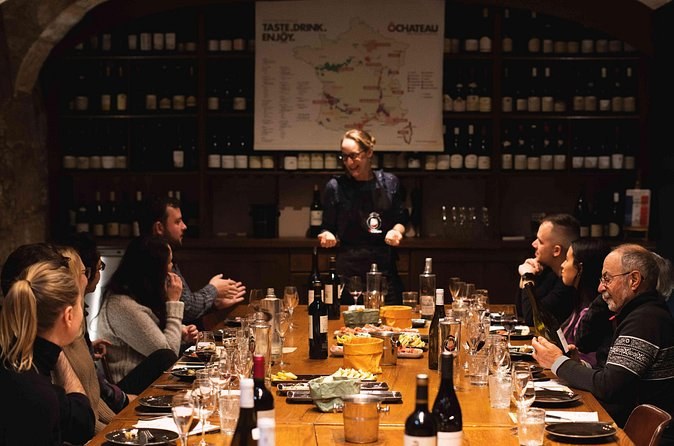
A sommelier, five French wines and a cheese board in a cellar near the Louvre. Also indoors, start to finish.
From $100 per person
Check Availability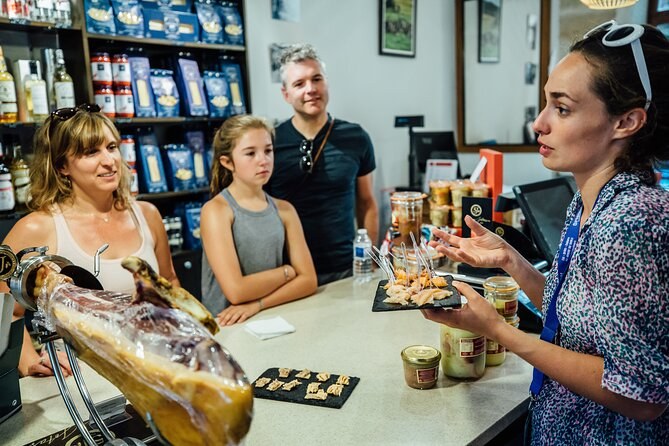
If you would rather walk: flat streets, a covered market at the start, and arcades to shelter under.
From $153 per person
Check Availability