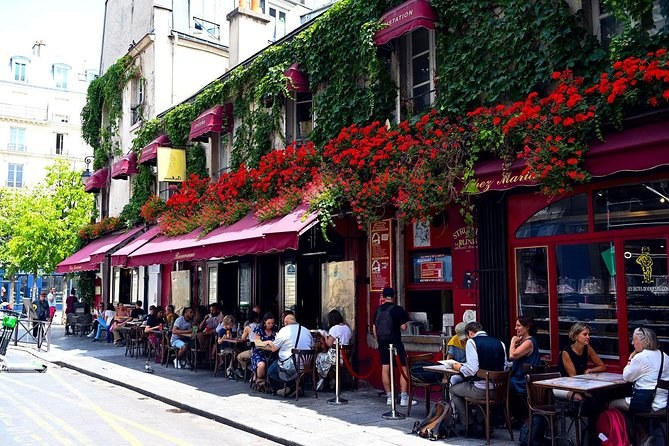
Paris Le Marais Food Tour With 10+ Tastings, Cheese, Wine & More
The Marais, ten-plus tastings, and the Rue des Rosiers falafel counter that no other quarter can offer.
From $105 per person
Check Availability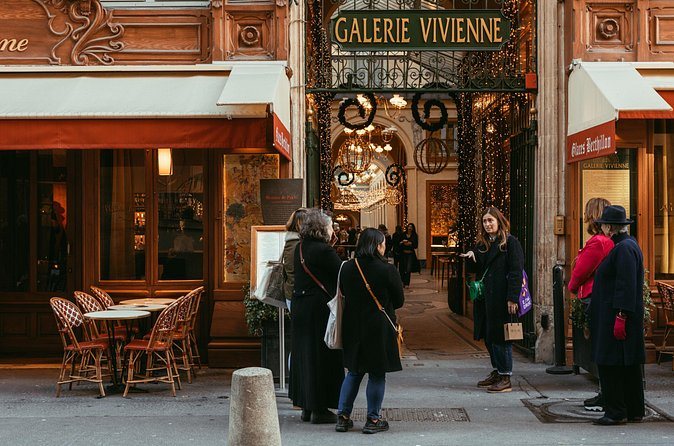
Four quarters carry guided food walks in Paris and they are not interchangeable. Le Marais is the densest and the flattest, Montmartre is a hill that pays you in a view, Saint-Germain sells you a choice of length, and the Latin Quarter turns a meal into a sightseeing walk. Pick the quarter, then pick the walk.
Most of these walks never leave one named quarter, and their stop lists show why that matters: the same operator will hand you falafel in the 4th and oysters in the 18th. A food tasting tour paris travellers rate highly in one quarter tells you almost nothing about what you would eat in another.
Flat, medieval in plan, pedestrianised where it counts, and carrying more walks than any other quarter. The stops that recur are the Rue des Rosiers, the Marché des Enfants Rouges and the Place des Vosges.
What you eat here: a croissant or a pain au chocolat to start, a croque-monsieur made to order, French cheeses and breads, handmade falafel, a macaron and high-end chocolate. Wine at most stops.
It is also the only quarter with step-free options. Its walks are the ones whose operators describe the route, the surfaces and the transport as wheelchair accessible.
North, and up. Every walk here is built as a full meal or a fifteen-tasting afternoon rather than a light tasting round, and the fares start higher for that reason.
What you eat here: boeuf bourguignon, oysters at a family-run bar, sausage with aligot, cream puffs, madeleines and a dessert crêpe. The routes run from the Moulin Rouge or the Place Blanche up the Rue Lepic and the Rue des Abbesses to the Sacré-Cœur.
The Left Bank, flat, and the only quarter where every listing offers two lengths at one address: two hours or three, six tastings or nine, with cheese added only on the longer one.
What you eat here: caramels, a dish of the day, foie gras, five cheeses, four cured meats, pastry, fresh bread and macarons, with still and sparkling wine. One operator swaps the whole savoury half for chocolate and pastry if you prefer.
It is also the only quarter with scheduled Spanish and French departures of its own, which matters if your party is not all English-speaking.
The oldest-fashioned eating on the site, and the most sightseeing. One route runs the Rue Mouffetard to the Panthéon and the Sorbonne; the other crosses the Île Saint-Louis to Notre-Dame and finishes near the Panthéon.
What you eat here: buckwheat galette, quiche, pâté en croûte, artisanal cheeses, macarons, and apple cider rather than wine on one of them.
Le Marais holds both ends of the range, from the cheapest walk on the site to one of the dearest, because it carries every format at once: short tasting rounds, full meals, a private option. Montmartre starts higher because every walk there is built as a meal. Saint-Germain sits in the middle and lets you choose your length, which is the same thing as choosing your price.
| Quarter | Walking | The dish to come for | Step-free? | Fares from |
|---|---|---|---|---|
| Le Marais | Flat, short | Falafel on the Rue des Rosiers | Yes, on some | $80 |
| Montmartre | Uphill, some stairs | Sausage with aligot | No | $105 |
| Saint-Germain | Flat | Foie gras and five cheeses | No | $86 |
| Latin Quarter | Gentle slope | Galette and cider | No | $99 |
Closer than the map suggests, and that matters if you are trying to fit two things into a day. The Marais and the Latin Quarter are about twenty-five minutes apart on foot across the Île Saint-Louis, and about ten on the metro. Saint-Germain is a fifteen-minute walk from the Latin Quarter along the boulevard.
Montmartre is the outlier. It sits north of everything else, and from the Marais it is a half-hour on line 4 or line 12 plus a climb at the far end. Do not plan a Montmartre walk immediately after something on the Left Bank.
The practical consequence is that your accommodation should decide your first booking and nothing else should. Walk out of your door, eat for three hours, and use the rest of the week for the quarters you have to travel to.
Two nights in Paris: the Marais, on the first afternoon. It is the densest and the flattest and it leaves you with the most usable addresses.
Four or five nights: the Marais early, then Montmartre or Saint-Germain later in the week once your legs know the city.
A return trip: Saint-Germain or the Latin Quarter, which almost nobody books first and which feed you the oldest-fashioned French food on the site.
A week or more: add a day out to Champagne in the middle, on a day you have nothing else planned.
Three are worth an evening on your own. Rue Montorgueil and the Rue du Nil in the 1st and 2nd carry the morning pastry walk but little else. Canal Saint-Martin in the 10th has natural-wine bars and bakeries and no guided food tour whatever. Belleville in the 20th has the cheapest and most various eating in the city and nothing here covers it.
That is not a gap in the market so much as a different kind of evening. Go hungry, go without a plan, and use what the dish list taught you.
Each one has its own page, with every walk that works it and what separates them.
If the practical side is still open, planning your visit covers meeting points and booking windows, and everything sits on the Paris Food Tours grid.
The Marais, ten-plus tastings, and the Rue des Rosiers falafel counter that no other quarter can offer.
From $105 per person
Check Availability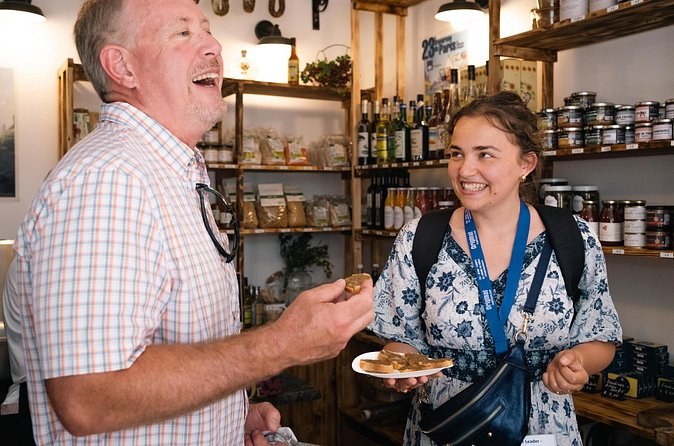
The most-reviewed way up the hill: macarons, cheese and cured meats, finishing on the Sacré-Cœur terrace.
From $141 per person
Check Availability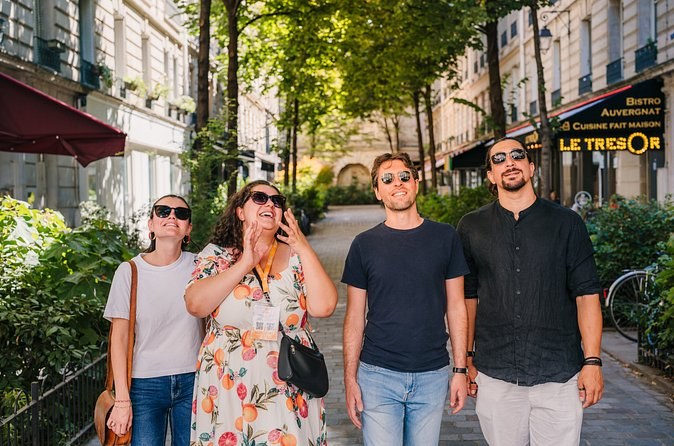
The Left Bank as a full meal, through the Marché Saint-Germain and the Cour du Commerce Saint-André.
From $117 per person
Check Availability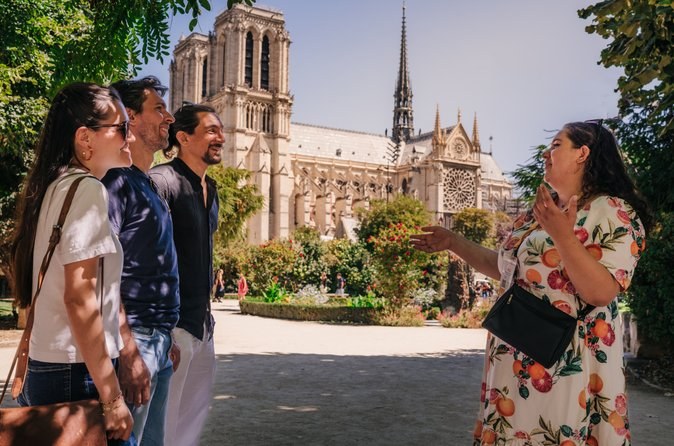
The Rue Mouffetard to Notre-Dame, with the Panthéon and the Sorbonne on the way past.
From $105 per person
Check Availability