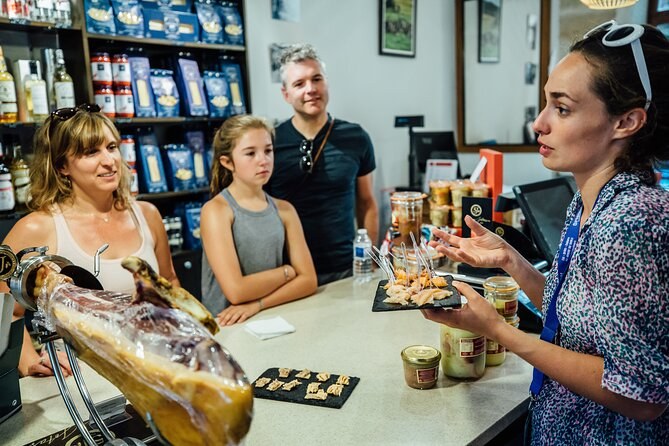
Paris Le Marais District Original Food and Wine Tasting Tour
Starts at the door of the Marché des Enfants Rouges, the 1615 market in fact number one.
From $153 per person
Check Availability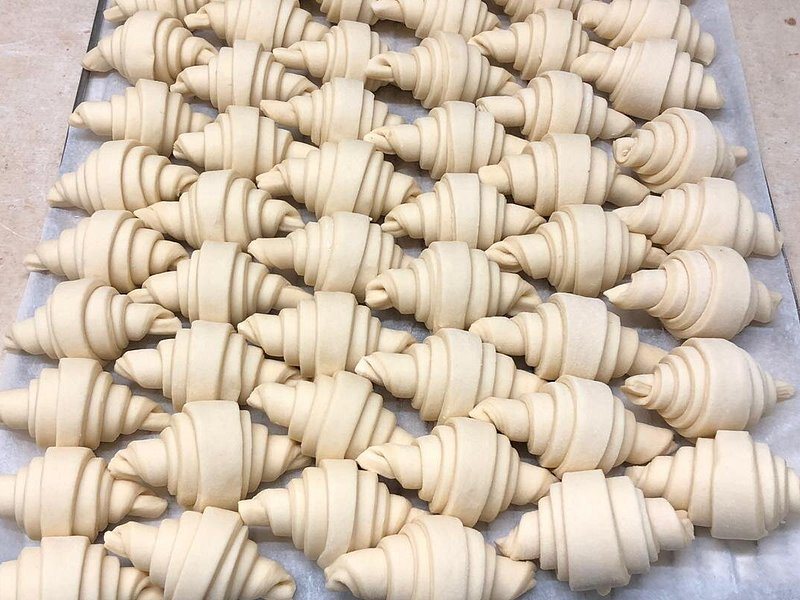
Paris has a covered market older than Versailles, a baguette competition whose winner supplies the presidency for a year, and a bakery holiday rota that was abolished by law in 2014 and is still repeated as fact. Fourteen things that surprise people, each with its source.
The Marché des Enfants Rouges at 39 rue de Bretagne has been trading since 1615 and was listed as a monument historique in 1982. It is older than the palace at Versailles, and it is still a working market with a lunch crowd.
A prefectural system used to split Paris-region bakeries into two groups that alternated July and August closures. The law of 20 December 2014 removed the power to regulate it, and the government has confirmed it will not be restored. Bakers still stagger their holidays — but voluntarily.
The Grand Prix de la Baguette de Paris is judged annually by the Ville de Paris. The 2026 winner, announced on 26 February, was Sithamparappillai Jegatheepan of Fournil Didot in the 14th arrondissement. The prize is €4,000 and a year supplying the Élysée Palace.
Entry to the cathedral costs nothing and has since it reopened in December 2024. What is not free is the towers, a separate attraction at €16, booked online only. The landmarks page has the rest.
Entry to the Sacré-Cœur is free; the dome is €8, for over-sixteens, open daily until 20:45 with last admission at 20:15 — and it shuts in bad weather. On that hill, that happens.
The counters of the Rue des Rosiers are the edible survival of the Marais’s Jewish quarter, and three separate walks here put a handmade falafel in the fare. It surprises people who booked a French food tour, which tells you more about the expectation than the city.
Monday, city-wide, plus 1 January, 1 May and 25 December. It is the city’s own rule for its scheduled markets. The shopping streets keep their own hours and many open on Monday precisely because the markets do not.
A macaron is two almond shells with ganache between them, and the ruffled band at the base of each shell — the pied — is what a pâtissier is judged on. It forms only if the batter is mixed and rested correctly. Two shells, a ganache, and a technical exam.
From 12 January 2026, €16 for EEA nationals and residents and €22 for everybody else — the first monument of the Centre des Monuments Nationaux to price the two differently. No food tour here includes it.
Both Champagne day trips warn you to bring warm clothes because the chalk cellars sit at about 45°F / 10°C all year. In the middle of a twenty-five-degree Paris day that is the easiest packing note to ignore.
The most-reviewed listing here lets you pick Montmartre or the Latin Quarter at booking, under one product code, with a different route and a different menu behind each. It is the only one that does.
The abbey at Hautvillers holds his tomb, and one of the Champagne day trips stops there along with Reims cathedral, where the kings of France were crowned. Both are on the way to the vineyards rather than a detour.
On the Météo-France 1991–2020 normals for Paris-Montsouris, May takes 69.0 mm. November takes 54.3. December has the most rain days at 11.4. The weather page has all twelve months.
Several state it outright, a couple rule out coeliac disease by name, and others say plainly that they cannot take severe allergies. It reads as blunt. It is better than finding out at the second stop, and the FAQs set out which listing says what.
| The fact | The figure | Source |
|---|---|---|
| Marché des Enfants Rouges founded | 1615 | paris.fr |
| Listed as a monument historique | 1982 | paris.fr |
| Bakery closure rota abolished | 20 December 2014 | Assemblée nationale |
| Baguette prize, and the Élysée contract | €4,000 + one year | presse.paris.fr |
| Notre-Dame cathedral | Free | paris.fr |
| Notre-Dame towers | €16 | CMN |
| Sacré-Cœur dome | €8 | sacre-coeur-montmartre.com |
| Sainte-Chapelle, non-EEA | €22 | monuments-nationaux.fr |
| Champagne cellars, year round | about 10 °C | the listings themselves |
| Wettest month by depth | May, 69.0 mm | Météo-France |
That Paris shuts in August. Independent bakeries and small shops do take holidays, and they still stagger them so a neighbour stays open. The tourist-area cafés, the bistros and every major monument stay open throughout. The weather page has the month in full.
That a food tour gets you into things. It does not, anywhere in the city. What it gets you is a table at an hour when you could not get one, and somebody who can tell you which of two identical-looking counters is the good one.
Every walk here names the quarter it works and what the fare covers.
The dishes in facts six and eight are defined on the dish list, the addresses in facts one and seven are on the markets page, and the walks are on the Paris Food Tours grid.
Starts at the door of the Marché des Enfants Rouges, the 1615 market in fact number one.
From $153 per person
Check Availability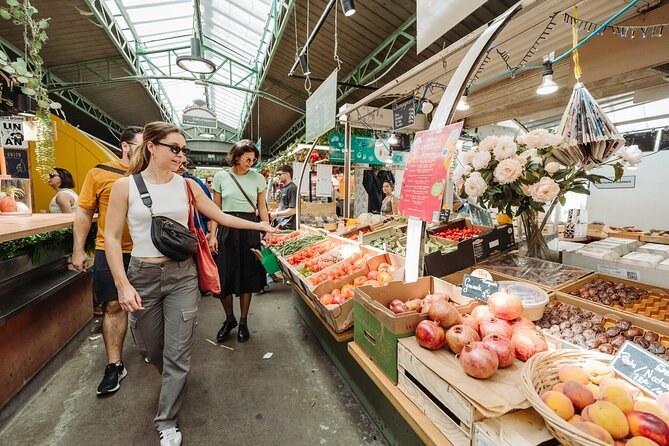
Stops at Poilâne, whose sourdough is the loaf people cross the city for, and names its other seven shops in advance.
From $119 per person
Check Availability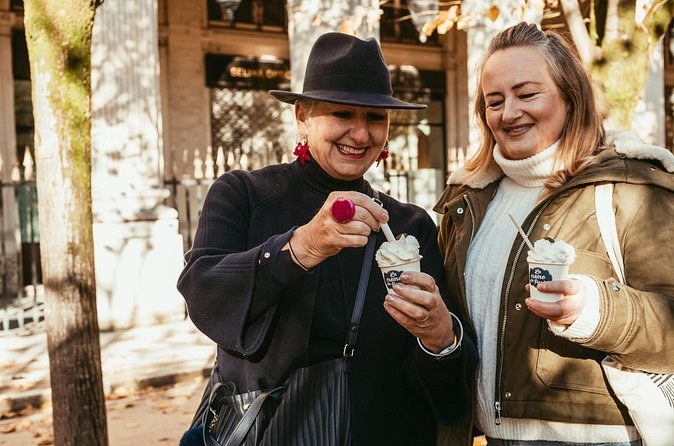
Bean-to-bar chocolate from makers who roast in the city, and the morning croissants the competition exists to judge.
From $117 per person
Check Availability